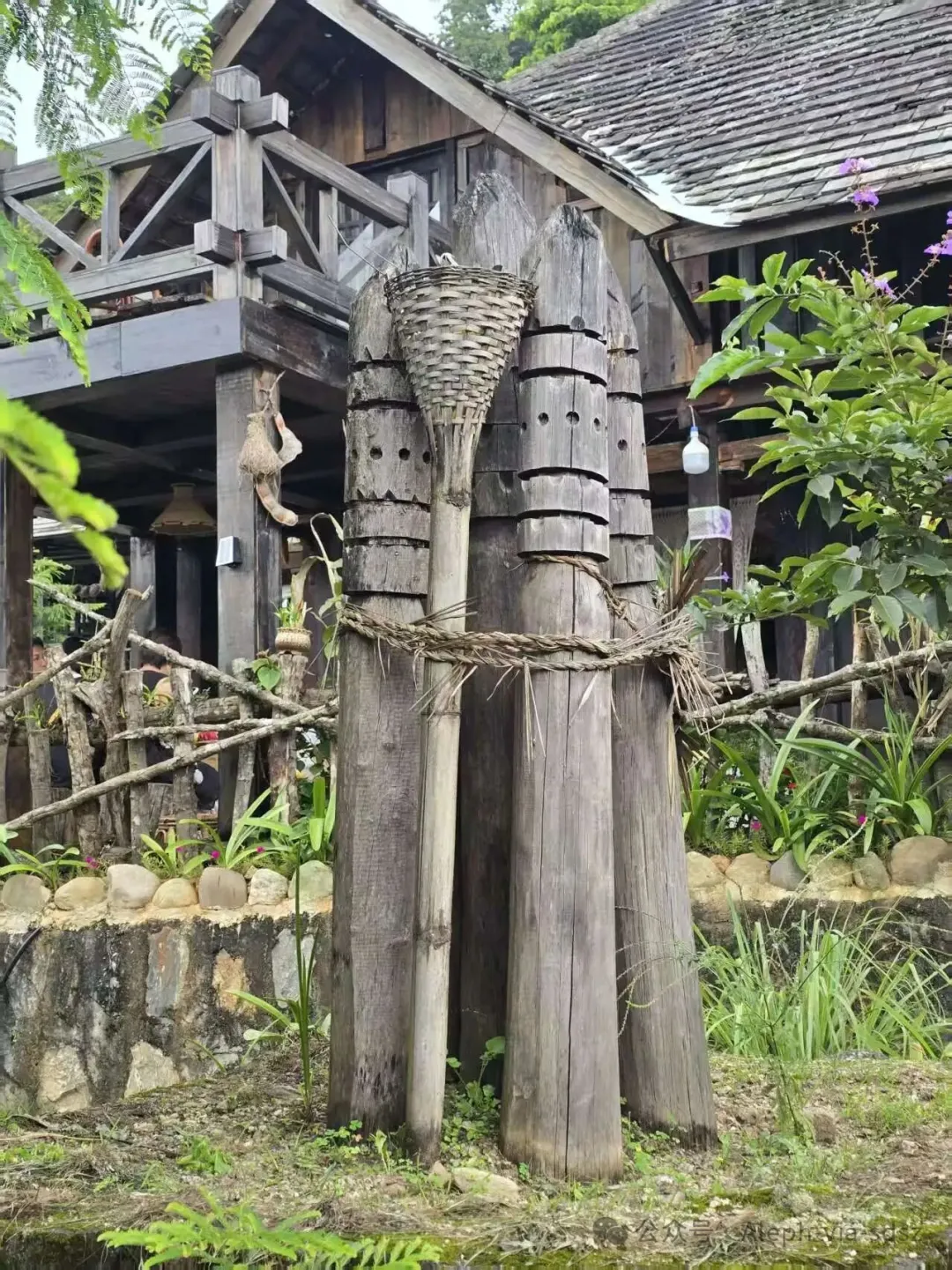
In a frenzied market where ancient-tree Pu’er tea is often inflated to tens of thousands of yuan per kilogram, a legend persists on Jingmai Mountain in Lancang, southern Yunnan, of a tea that “must never be sold.”
Step into Mount Ailing—the sacred mountain where the Blang people have lived for generations—and wander beneath the primeval broadleaf forest that blocks out the sky. You’ll discover that the tea trees here aren’t pruned into low, neat hedges like those on the plains and terraces, but instead stand tall and straight, mottled and weathered, scattered beneath the shade of the great trees. Deep within the tea gardens that each family has cultivated for generations stands a “Tea Spirit Tree”—the tallest and oldest of them all, revered by the entire family as a guardian deity.
Every year before the spring tea harvest begins, farmers must prepare incense, candles, and wine to first offer a devout sacrifice to their family’s “Tea Spirit Tree,” praying for the tea spirit’s protection against pests. Only after the ritual is complete are they permitted to pick a small number of fresh leaves from this tree, which are then carefully roasted according to ancient methods to create “Tea Spirit Tea.”
Yet this tea, which embodies the purest essence and spiritual energy of the entire plantation, is never sold—not even a single leaf—no matter how tempting the prices offered by outside merchants may be. Its sole destination is to be solemnly placed on the family’s altar throughout the long year, used for worshiping ancestors and deities.
In our previous fieldwork, we witnessed how an imported monotheistic religion used radical theology to “destroy idols,” reducing Mangshi’s sacred forest to mere timber to be cut down and monetized; we also saw how, amid wildfires and the wave of cultural tourism in Wengding, Cangyuan, the sacred order was co-opted into neat wooden fences and reduced to explanatory plaques in display cases.
However, in the face of the most ferocious onslaught of the commodification craze, Jingmai Mountain offers a starkly contrasting example: the ancient animistic belief system has not only failed to collapse in the face of modern capital but, on the contrary, has—in an exceptionally resilient manner—firmly confined commercial exchange within the boundaries of the sacred order.
This cup of “Tea Spirit Tea”—which is not for sale—is precisely the key to unlocking the secrets of this ancient symbiotic system.
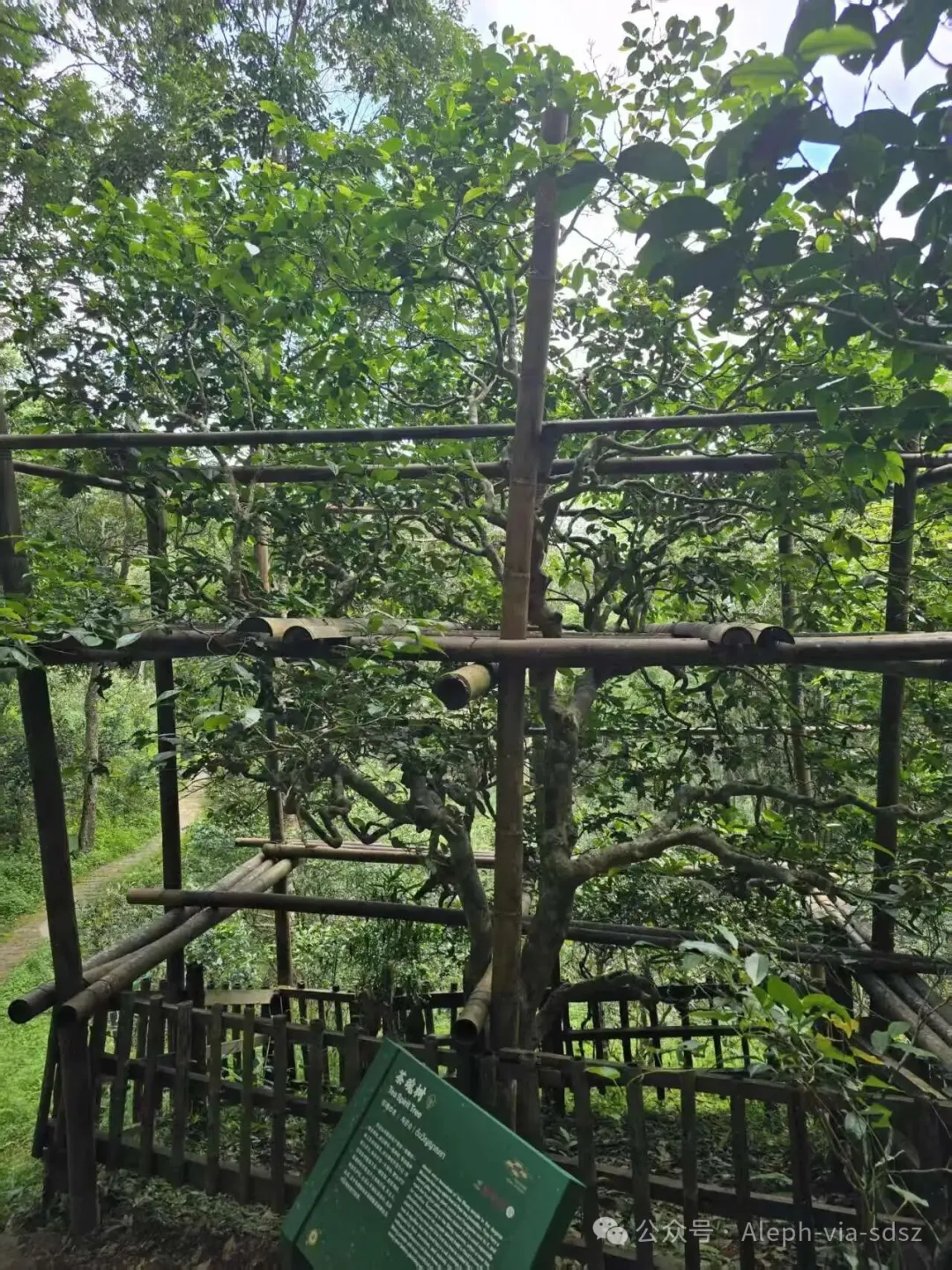
I. Spatial Topology and the Sacred Covenant: The Micro-Politics of the Tea Ancestor Tree and the Tea Spirit Tree
In the cosmogony of the Blang people, Ailing Mountain—with a total area of 441 hectares and home to nearly 130,000 ancient tea trees—has never been merely an economic forest providing a livelihood, but rather the very source of life and spiritual totem for the entire tribe.
More than 1,300 years ago, the ancestors of the Blang people encountered a deadly miasma and plague during their migration. On the brink of extinction, their chieftain Pa Ailing accidentally discovered that boiling the leaves of wild tea trees found in the mountains could neutralize toxins and cure diseases, thereby saving the tribe from certain doom. After settling on Ailing Mountain, Pa Ailing led his people in domesticating the wild tea trees and establishing tea gardens. On his deathbed, he left his descendants with an ancestral adage etched deep into their very bones:
“Gold and silver left behind will be spent; cattle and horses left behind will die of disease; only tea trees can be passed down for future generations to enjoy.”
This ancestral adage, passed down for a thousand years, establishes a solemn, multi-species social contract from an ecological anthropological perspective: tea trees are not objects waiting to be conquered and plundered by humans, but rather “benefactors” and “embodiments of ancestors” who once saved the tribe’s lives.
To uphold this contract, the Blang people have established a rigorous and complementary dual sacred tree system in their landscape:
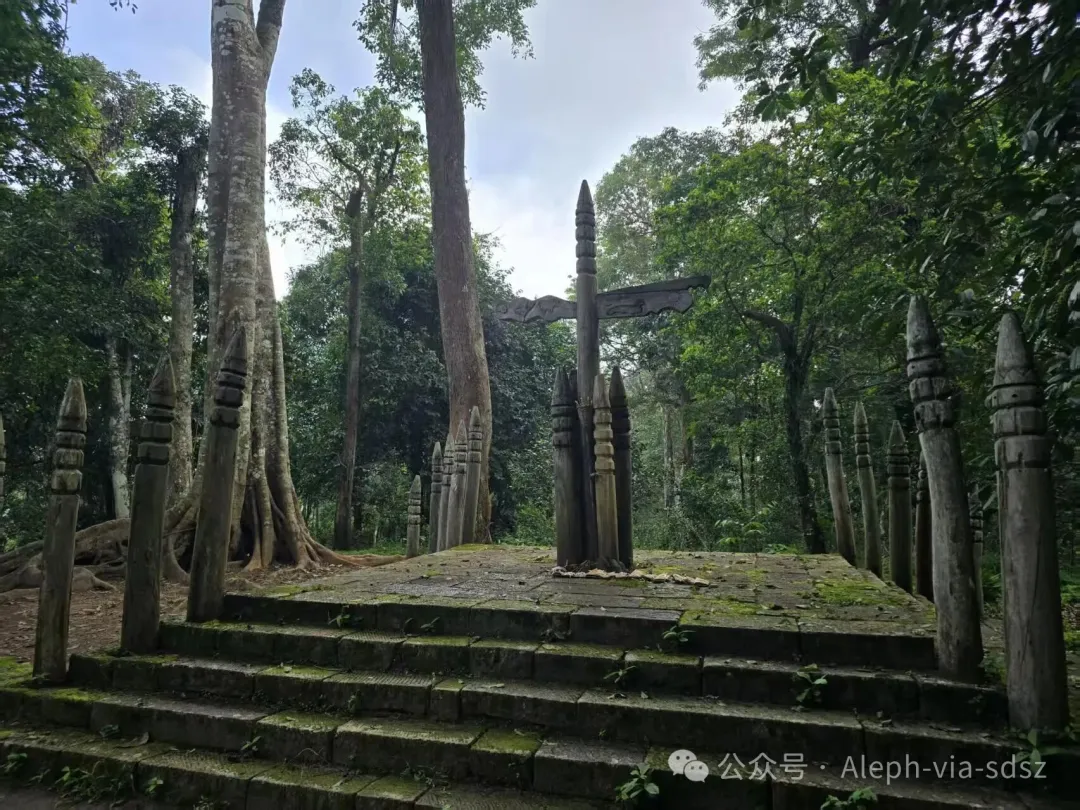
1. The “Ancestral Tea Tree” in the Public Realm
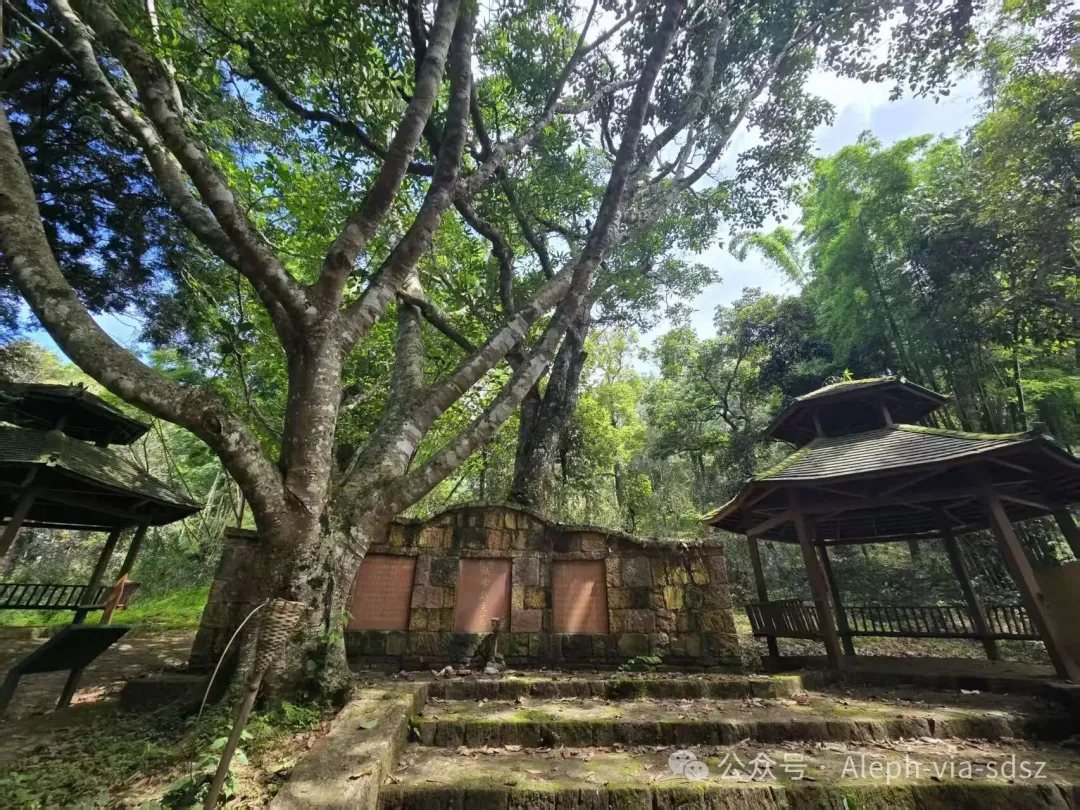
Standing beside the Tea Spirit Platform at the heart of Mount Ailing, it was established specifically to commemorate Pa Ailing, the clan’s tea ancestor. Every April during the Shankang Tea Ancestor Festival, men, women, and children from all nine villages gather here, led by Buddhist masters and elders, to offer the first fresh fruits and tea leaves of the new spring, thereby collectively affirming the clan’s history and the merits of their ancestors.
2. The “Tea Spirit Tree” in the Micro-Private Realm
Scattered throughout the private tea gardens of individual households, these trees serve as spiritual landmarks for specific plots of land. They act as divine nodes establishing an intimate connection between people and the land, guiding the daily labor of every tea-farming household.
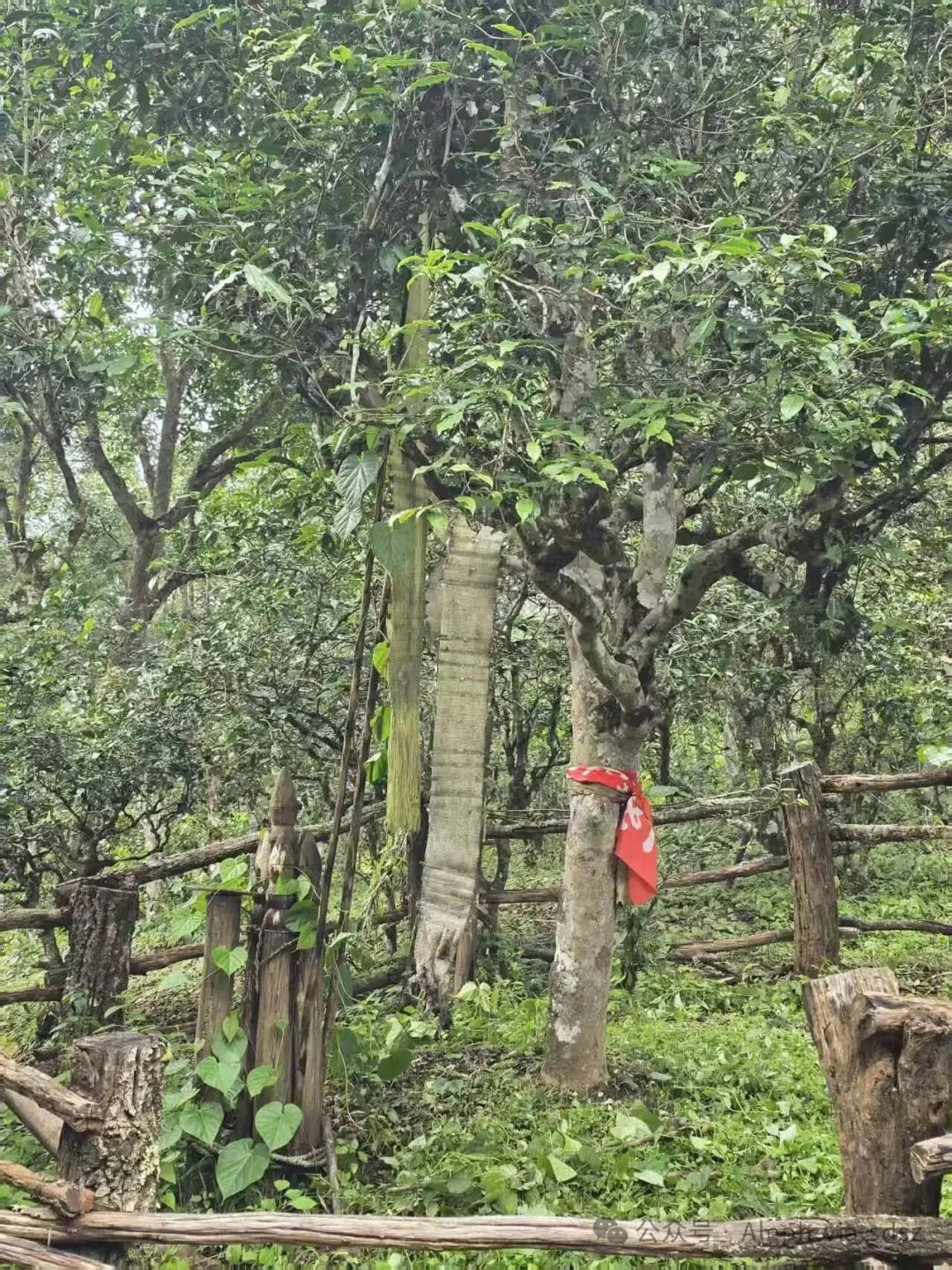
By elevating the Tea Ancestor to a public faith and infusing the “Tea Spirit” into every tea garden, the Blang people have woven a sacred network across the entire mountain. When the finest “Tea Spirit Tea” is endowed with the sacred attribute of being absolutely non-transferable, it directly establishes an uncrossable ethical red line in reality: the earth’s bounty may sustain people, but it must never be reduced to a mere commodity for unscrupulous profit-making.
II. Sacred Time Forcibly “Puts the Brakes” on Capitalist Frenzy
In modern commercial logic, capital seeks to infinitely compress production cycles and maximize output efficiency. But on Jingmai Mountain, a traditional ecological knowledge system rooted in sacred religious time has forcefully applied the brakes to this economic impulse.
The most emblematic mechanism is the “Closing Festival” (关门节) and “Opening Festival” (开门节), which the Blang and Dai peoples have jointly observed for a thousand years:
Every year in the ninth month of the Dai calendar, as the rainy season arrives, the villages punctually begin the three-month-long “Closing Festival.” During these ninety days, the entire mountain region enters a sacred state of rest:
- Wedding banquets are prohibited within the villages;
- Major construction projects are banned;
- Villagers are not allowed to travel far without cause;
- The elders gather daily at the Burmese temple to recite sutras and offer prayers, and the entire village engages in quiet self-reflection and spiritual cultivation.
This set of religious precepts, which may seem mysterious, is in fact an exquisitely sophisticated mechanism for adapting to climate and ecology: In the southwestern frontier during the rainy season, the mountains are saturated with water, and large-scale construction projects can easily trigger landslides and soil erosion; for tea trees, excessive summer rainfall leads to insufficient nutrient accumulation in the buds and leaves, resulting in a weak aroma.
The religious prohibitions of the “Closing the Gates” Festival compel people to “suspend harvesting” and seal off the mountains during the rainy season, thereby avoiding flash floods and tropical diseases while granting people, tea trees, wild bees, and insects in the forest a respite and recovery period lasting several months. It is not until the “Opening the Gates” Festival arrives in the twelfth month of the Dai calendar—when the taboos are lifted—that all things return to their secular rhythms of labor.
Micro-Ecological Restraints in Harvest
Even during the prime season for spring tea harvesting, traditional norms continue to curb human greed at every turn:
- Tea picking follows a strict schedule: Workers must ascend the mountains in the early morning before the dew has dried and must stop work by noon when the sun is at its peak, in order to preserve the tea leaves’ delicate fragrance;
- Picking techniques strictly adhere to the “one bud, two leaves” rule: One or two older leaves must be deliberately left at the tip of each branch, and it is absolutely forbidden to strip the branches bare or snap them off, ensuring the tea trees retain the vitality needed to regenerate the following year;
- The traditional “forest-grown tea” multi-layered cultivation system is strictly upheld: The upper layer consists of natural, native trees that block out the sun and are protected from logging; the middle layer comprises ancient tea trees that absorb diffused sunlight; and the lower layer features naturally growing herbs and microorganisms, with fallen leaves transforming into fertile soil.
Here, the tea farmers’ resolute resistance to chemical pesticides and herbicides did not initially stem from the constraints of modern organic farming certification standards, but rather from the most profound reverence deep within their hearts: anyone who sprayed poison on the tea mountains or destroyed the forest would disturb the six mountain deities and the spirits of the tea trees, bringing disaster and divine punishment upon their entire family.
III. Dual Belief Systems and Inter-ethnic Networks: Why Did Jingmai Mountain Avoid a Cultural Break?
In the fields of Mangshi, we observed that after the arrival of an exclusive monotheistic religion, traditional sacred trees were cut down as “nests of demons” in the name of “destroying idols,” resulting in a profound ontological rupture; In contrast, the early indigenous beliefs of Awa Mountain in Cangyuan relied heavily on the closed and strict “Awa Li” and supernatural fears, rendering them fragile and vulnerable when faced with powerful external administrative and cultural-tourism transformations.
The core secret behind Jingmai Mountain’s ability to maintain ecological resilience for a thousand years lies in the Blang people’s highly inclusive “dual-track belief system” and their exceptionally robust cross-ethnic collaborative network:
1. A Dual-Track Spiritual Order
The Blang people’s spiritual world is supported by two parallel systems. Theravada Buddhism governs rewards in the afterlife, moral instruction, and large-scale community festivals; boys enter monasteries for short-term spiritual training in their youth, and every village features a simple yet elegant Burmese-style temple.
Meanwhile, indigenous animistic beliefs—such as the Tea Ancestor, Mountain God, Tea Spirit, and Fire Pit God—firmly govern the current fertility of the land, micro-ecological balance, and forest productivity. The Buddha governs the cycle of good and evil, while the Tea God governs the mountains, forests, and vegetation; these two systems coexist harmoniously within the same village, neither conflicting nor excluding the other.
2. A Harmonious Inter-ethnic Ecosystem among Five Ethnic Groups
The entire Jingmai Mountain region is home to five ethnic groups—the Blang, Dai, Hani, Wa, and Han—with nine ancient villages scattered across the landscape (including Dai villages such as Jingmai Dazhai and Nuogan in the north, and Blang villages such as Wengji and Mangjing in the south).
Members of each ethnic group are fluent in both Mandarin and the Dai language, and interethnic marriages are extremely common. What is even more remarkable is that these marriages have consistently adhered to the principle of “intermarrying without losing one’s culture, and forming alliances without forgetting one’s own ethnic roots”—wedding customs from both sides are observed, festivals from both sides are celebrated, and the cultures of each village remain distinct and are mutually respected.
This long-standing harmonious coexistence among multiple ethnic groups, coupled with a religious structure characterized by low exclusivity, has endowed Jingmai Mountain with exceptional cultural resilience. This allows the community to calmly assimilate external elements of modernity without succumbing to intense internal cultural conflict or extreme fundamentalist resistance.
IV. Refusing to Be “Turned into a Specimen”: Why Didn’t Jingmai Mountain Become a Second Wengding?
Economic sociologist Karl Polanyi once proposed his famous theory of “embeddedness”: in premodern societies, human economic behavior is always subordinate to and deeply embedded within religion, customs, and social relationships. The crisis of modernity lies precisely in the market mechanism’s attempt to forcibly “disembed” these elements, reducing land, labor, and all things in nature to cold, commodified objects of exchange.
On Jingmai Mountain, we witnessed an extremely rare instance of “reverse embeddedness”: the market exchange of Pu’er tea did not destroy local society but was, instead, firmly embedded within the Blang people’s veneration of the tea ancestor and their ecological ethics.
This mechanism also answers the profound puzzle we encountered during our fieldwork in Cangyuan: Why hasn’t Jingmai Mountain become the next Wengding—a place of spatial suspension and forced relocation?
In Wengding, the modern cultural tourism system has thoroughly “turned sacred objects into specimens”—the residents were relocated en masse, while the sacred tree and the wooden drum house were left within a closed scenic zone that was rebuilt after a fire, reduced to folk exhibits for scheduled performances; their sacredness has been completely hollowed out by being severed from daily life.
However, after Jingmai Mountain successfully secured World Heritage status in 2023 as a “Cultural Landscape of Old Tea Forests of the Jingmai Mountain in Pu’er,” the local community has pursued a completely different conservation path:
- Indigenous residents remain on the mountain; ancient villages remain vibrant: Large-scale demolition and construction are strictly prohibited in the nine ancient villages, and the indigenous residents are resolutely not being relocated. Sacred trees continue to take root in the villagers’ real-life livelihoods—both in front of and behind their homes—and the morning smoke from cooking fires, nighttime conversations by the hearth, and labor in the tea groves have never ceased.
- Youth Returning Home and Cultural Revitalization: The heritage premium from ancient tea trees is directly reinvested into the local community. Large numbers of young people who had previously worked away from home have chosen to return to start businesses—growing tea, processing tea, and opening unique guesthouses. Senior citizen classes and mother-tongue schools have been established in the villages, where the younger generation once again gathers around the hearth to listen to elders recite long ancient songs and learn to retell the epic of Pa Ailing, the Tea Ancestor, in the Blang language.
- Modern Integration of Living Institutions: The modern World Heritage monitoring system (drone patrols, digital surveillance) forms a subtle complement to the traditional “village regulations for tea protection.” Ancient ecological taboos have been naturally translated into institutional safeguards for modern ecological civilization.
Here, faith is neither confined behind fences nor frozen on informational signs. It remains alive—in the calloused hands of tea pickers and in the firewood that burns ceaselessly day and night in the hearth.
Between the Sacred Tree and the Market
On the early morning of our departure from Jingmai Mountain, a sea of billowing clouds once again tenderly enveloped the entire Ailing Mountain. On the stilt houses of Mangjing Village, a tea farmer served a cup of freshly dried autumn tea from ancient trees; the tea liquor was clear and bright, exuding the rich, distinctive fragrance of orchid honey characteristic of the flora.
The lessons from Mangshi teach us that when nature is thoroughly demystified and sacred forests are dismantled as idols, trees are reduced to timber at the mercy of others; The regret of Cangyuan reminds us that when sacredness is stripped from daily life and reduced to a cultural exhibit behind bars, reverence turns into a hollow tourist attraction.
Only on Jingmai Mountain, in the face of the surging tide of modern commerce, have the Blang people relied on the ancient wisdom left by their ancestors over a thousand years ago to preserve that cup of “tea that embodies the soul—tea that cannot be sold.”
This offers the modern world a profoundly subversive revelation:
The solution to the ecological crisis may never have lain in brutally separating humans from nature with barbed wire or nature reserves; rather, it lies in whether humanity can reestablish a non-anthropocentric ethical dimension—one that preserves, upon this earth, a sacredness and dignity that cannot be priced for all living things that sustain us.