
Beneath the Nile's golden sunset glow, the linen robes, glittering gold ornaments, and elaborate wigs of ancient Egypt are far more than mere adornments. They are living codes of a civilization, stitching the empire's cosmology, social hierarchy, and eternal dreams of the afterlife into every thread and fold.
Lower Garments
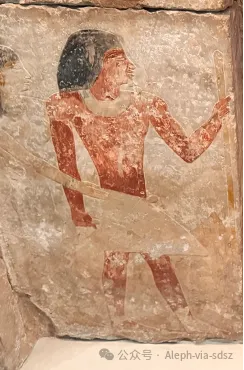
Egypt's recorded history stretches back to around 3100 BC, marking it as one of humanity’s earliest centralized civilizations. Art serves as both a recorder and a spiritual expression of a civilization, and fashion, as a branch of applied art, is directly integrated into daily life and social activities. What follows is a description and analysis of relevant cultural relics, all photographed by the author during a visit to the Metropolitan Museum of Art. The photography equipment used was a standard consumer-grade digital camera, with most shots taken under indoor ambient light; some images may have slight color distortion due to lighting and glass reflections.
This is a mural fragment from the side wall of an Egyptian temple in the Met’s collection. The figure is depicted in profile, a standard posture in ancient Egyptian mural art for representing characters in motion or engaged in ritual activities. The figure’s right hand is bent at the chest, holding a cylindrical staff—a gesture that appears frequently in Egyptian artistic depictions, generally interpreted by researchers as a sign of respect for deities or the performance of official duties. The figure’s attire matches the typical dress of upper-middle-class men in the Middle Kingdom period, leading to the inference that he may be a priest or a low-ranking noble. His left hand position is unclear, with the relevant part of the mural having faded due to pigment oxidation and physical wear over long-term preservation; it is hypothesized that he may have been holding ritual offerings, but this cannot be confirmed due to the lack of remaining details.
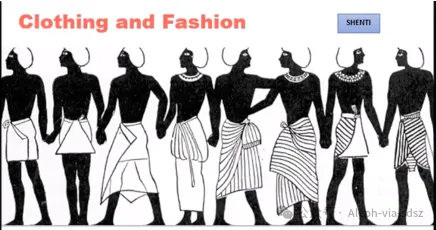
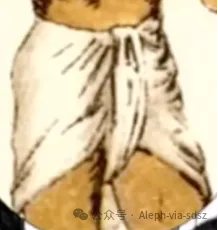
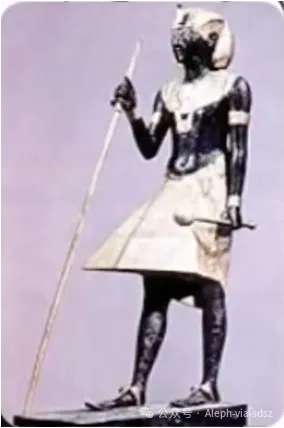
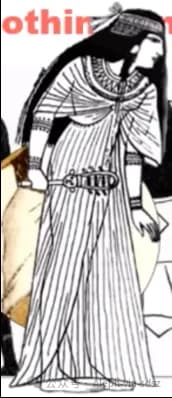
The figure wears a piece of wrapped white cloth around the lower body, known as a Shenti—the basic lower garment for men of all classes in ancient Egypt. The Shenti’s length and wrapping method varied by era and social status: during the Early Dynastic Period, it was short, generally only covering the hips; by the New Kingdom Period, longer versions that reached the calves appeared among the upper class. A notable variation is the "stiffened Shenti," which was soaked in sizing made from plant starch during production, causing the front of the garment to protrude outward after wrapping. This style is widely recognized by academia as a symbol of fertility worship, but there is no direct textual evidence to confirm this association—it remains a speculative conclusion based on iconographic analysis. Such stiffened Shentis were mostly worn by nobles and pharaohs, which also explains the frequent exaggeration of reproductive-related motifs in Egyptian royal art.
The common lower garment for women in ancient Egypt was called a Kalas—a pleated linen skirt that could be worn in various ways. On many occasions, women only wore the Kalas without upper body clothing. Partial nudity was not considered a moral taboo in ancient Egyptian society, but full nudity in public was generally unacceptable. The Kalas was made of thin linen fabric, which was lightweight and breathable, suitable for the hot and dry climate of Egypt. However, relevant textile research shows that this kind of pleated linen had poor sun protection performance, with an ultraviolet transmittance of over 60%, so its practical function was mainly to cover the body rather than protect against the sun.
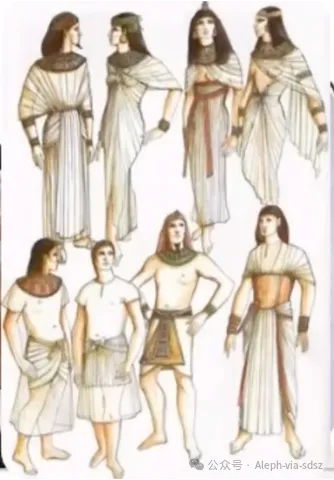
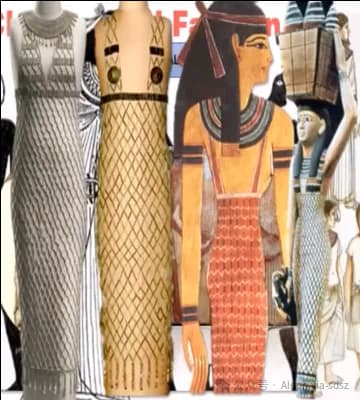
The mural also records multiple wearing methods of the Kalas, including high-waist and low-waist styles; there are also rare examples of men wearing the Kalas in reverse in some tomb paintings, though the reason for this remains unclear. In addition to linen skirts, there was another type of skirt made of natural beads and rough stones in ancient Egypt—craftsmen drilled holes in each bead by hand, then strung them together with linen threads to form a skirt. The two beaded skirts displayed in the Met’s collection are from the Old Kingdom and the Ptolemaic Period respectively, with a time span of nearly 2,000 years, but their overall shape and structure are highly consistent, with only minor differences in bead size and arrangement. This phenomenon indicates that this style of skirt had stable popularity in Egyptian society, but it is also controversial whether it can be defined as "fashion"—some scholars believe that it was a ritual costume only worn during specific ceremonies, rather than daily wear.
These beaded skirts had no lining and were worn directly against the skin, which further confirms that ancient Egyptians did not feel ashamed of partial nudity. From a functional perspective, however, this kind of beaded skirt had no elasticity and poor wear resistance, and was easy to break during movement, so it had little practical value in daily life. Most researchers agree that its main function was to display the wearer’s wealth and social status—beads made of semi-precious stones such as turquoise and carnelian were exclusive to the upper class, while ordinary people could only use clay beads.
Headdresses
The most common headdress in Egyptian artistic relics is called a Nemes—a striped linen headcloth that is often associated with pharaohs due to its appearance on Tutankhamun’s death mask. However, the production material of the Nemes was not precious metal, but ordinary linen cloth—craftsmen soaked the linen in starch sizing, then ironed it to make it stiff, and finally painted it with black and gold stripes. The pigments used were mainly carbon black and ochre, which were common mineral pigments in ancient Egypt, not expensive dyes. Due to the erosion of sandstorms and the natural oxidation of pigments, most of the original patterns on the existing Nemes cultural relics have faded, and the color saturation is far lower than that recorded in murals.
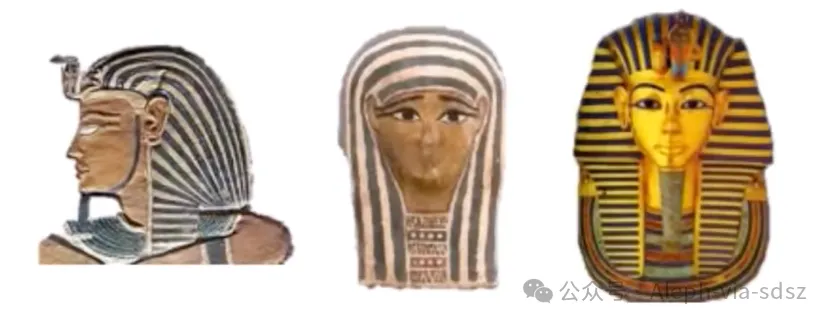
When the front flap of the Nemes headcloth is tucked to the back, it forms another headdress style called a Khat. The Khat is simpler in shape than the Nemes, without the hanging strips on the sides, and was mostly worn by nobles and priests in daily life. However, there is no clear distinction standard between the Khat and the Nemes in the existing textual records, and some scholars believe that they are just different wearing forms of the same kind of headcloth, rather than two independent types.
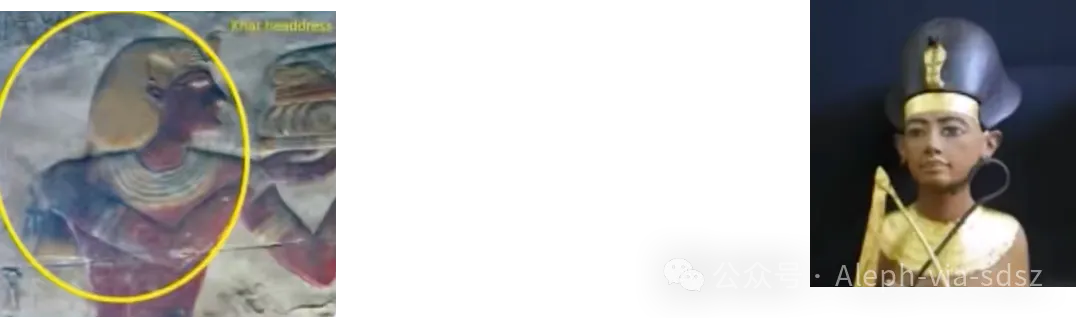
The blue headdress is known as a Khepresh, also called the "Blue Crown of War." In mural depictions, wearers of the Khepresh are almost always pharaohs or military generals, and scenes with the Khepresh are mostly related to warfare or military parades. The color of the Khepresh comes from frit glaze—a glass-like material made by firing quartz sand and copper oxide. However, there is controversy over whether the Khepresh was actually worn in battle: some scholars believe that it was a ceremonial crown only used in rituals, because the frit glaze was brittle and easy to break, and could not withstand the impact of actual combat; others hold the opposite view, citing depictions of pharaohs wearing the Khepresh in battle scenes in some reliefs.
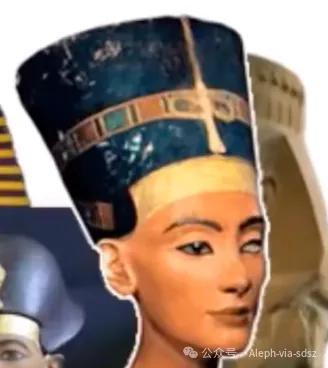
The headdress shown in the picture is similar in shape to the Khepresh, but its height is lower and the surface is smoother. According to the label of the cultural relic, this is a flat crown worn by women, which was popular during the New Kingdom Period. However, there are only a few existing examples of this kind of headdress, and its specific name and usage scenarios are still unclear—some researchers speculate that it was a headdress worn by queens or priestesses during religious ceremonies, but this has not been verified by inscriptions.
Jewelry
Ancient Egyptians had a strong preference for jewelry, and gold ornaments were the most popular among all accessories—this is related to the abundant gold deposits in Egypt and the ancient Egyptian concept that "gold is the flesh of the gods." Gold jewelry was not only used for decoration, but also believed to have the function of warding off evil spirits and connecting with the divine.
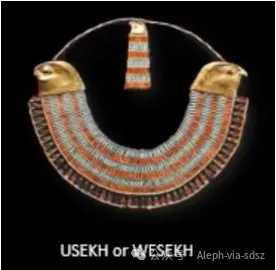
The item pictured above is a collar-shaped ornament called a Usekh (or Wesekh), which was one of the most common types of jewelry in ancient Egypt. The Usekh was usually made of gold sheets, faience beads, and semi-precious stones, and was worn around the neck. It was popular from the Old Kingdom to the Roman Period, with its size and material varying according to the wearer’s social status—royal Usekhs were often inlaid with precious stones such as lapis lazuli and emerald, while ordinary people could only use faience beads. However, there is a dispute in academia about the wearing method of the Usekh: some scholars believe that it was worn directly on the neck, while others believe that it was hung on the chest with a rope, based on the position of the Usekh in mural depictions.
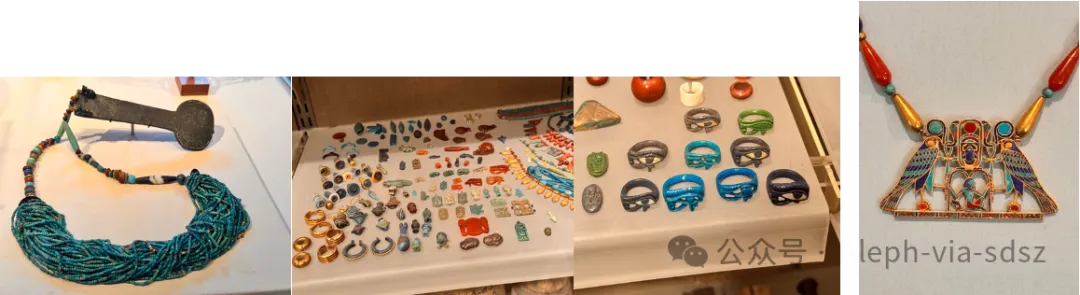
In addition to the Usekh, ancient Egyptian jewelry also included necklaces, bracelets, rings, earrings, and other types, with diverse craftsmanship such as beading, carving, filigree, and enamel firing. The four images above are the author’s personal favorite pieces from the Met’s ancient Egyptian jewelry collection—apologies for the poor photo quality, as the museum prohibits the use of flash photography, resulting in insufficient light in the images. These artifacts show the superb craftsmanship of ancient Egyptian artisans, but it is worth noting that some jewelry styles may have been influenced by foreign cultures—for example, the filigree technique was likely introduced to Egypt from the Near East during the Middle Kingdom Period, which is evidenced by the discovery of similar artifacts in Mesopotamian sites.
The aesthetic characteristics of ancient Egyptian jewelry show a high degree of consistency with modern jewelry—both pursue bright colors, symmetrical shapes, and prominent decorative effects. For example, the large gold rings in the collection are similar in design to modern "statement rings," which were used to show off the wearer’s wealth and status. However, it is controversial whether this similarity can be regarded as "aesthetic continuity"—some scholars believe that it is just a coincidence caused by the universal pursuit of beauty by humans, while others believe that ancient Egyptian jewelry has had a profound impact on the development of Western jewelry.
The fashion system of ancient Egypt fully reflects the close relationship between fashion and civilization: civilization provides a symbolic framework for fashion, and fashion, in turn, becomes a tangible carrier of civilization. From the pharaoh’s vulture headdress symbolizing divine authority to the farmer’s simple linen loincloth, every item of clothing is a visual marker of social hierarchy. From the scarab pectoral symbolizing rebirth and eternal life to the hippopotamus goddess Taweret amulet symbolizing fertility protection, every accessory carries the ancient Egyptians’ desire to channel supernatural forces into daily life. However, there is still a lot of uncertainty in the research on ancient Egyptian fashion—many conclusions are based on iconographic analysis and speculative interpretation, and lack direct textual evidence. For example, the symbolic meaning of many garment patterns is still a mystery, and the specific wearing occasions of some costumes are also unclear.
The sartorial wisdom of ancient Egypt provides us with a timeless insight: true fashion is never just a change in style, but a physical manifestation of the core values of a civilization. When ancient Egyptian craftsmen ground lapis lazuli into powder to make eyeshadow, they were not only pursuing beauty, but also integrating the color of the sky (a symbol of the god Horus) into their daily lives; when weavers created pleated linen fabrics, they were mimicking the ripples of the Nile, the source of life for the Egyptians. Fashion here becomes a medium of communication, translating abstract theological concepts and natural observations into a tangible form that can be perceived by the body.
Thousands of years later, when we stand in front of museum display cases and gaze at well-preserved sandals and corsets, we are not only appreciating the aesthetic taste of an ancient civilization, but also witnessing humanity’s eternal attempt to define itself through clothing, to anchor its sense of identity, and to resist the passage of time. The fashion legacy of ancient Egypt is like a bronze mirror, reflecting the common pursuit of all civilizations: to weave the finite life of an individual into the infinite narrative of a civilization. However, as research progresses, we may find that some of our current understandings of ancient Egyptian fashion are incorrect—after all, the distance of thousands of years has left us with too many gaps and uncertainties.
This is perhaps the most valuable lesson that ancient Egyptian fashion offers to the present day: in an era where fashion is increasingly fragmented and short-lived, the most touching sartorial art is still those works that can connect individuals with the grand narrative of civilization—just like the ancient Egyptians, who used a single strand of linen and a glimmer of gold to inscribe the light of their civilization on their mortal bodies.